
This is one of the most common questions that I am asked by my pupils!
What is a scale?
A scale is an ordered set of notes defined by a specific interval pattern.
Most commonly, scales are written starting on a chosen tonic (also called the root note) and move note-by-note to the same note one octave higher.
The two most common scale types in Western music are major and minor scales, each with its own fixed pattern of whole steps and half steps.
For example, the C major scale follows this interval pattern:
Tone – Tone – Semitone – Tone – Tone – Tone – Semitone
Which gives the notes:
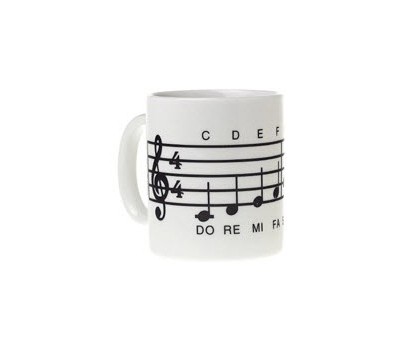
C – D – E – F – G – A – B – C
When practising, scales are often extended across multiple octaves. A two-octave C major scale simply continues the same interval pattern into the next octave:
C – D – E – F – G – A – B – C – D – E – F – G – A – B – C
The key point is that a scale is defined by its interval pattern, not by how many octaves you play or the specific order the notes later appear in music.
Scales are useful because they describe the overall tonal environment — the pool of notes that sound stable within a given key.
What is an arpeggio?
An arpeggio is the notes of a chord, played one at a time rather than all together.
Like scales, arpeggios are often written starting on the tonic and moving upward through one or more octaves.
For example, a C major chord contains the notes:
C – E – G
So a one-octave C major arpeggio would be written as:
C – E – G – C
A two-octave arpeggio continues the same chord tones into the next octave:
C – E – G – C – E – G – C
Arpeggios are especially important because they outline the harmony directly. When the chord changes, the arpeggio changes with it — even if the key stays the same.
This makes arpeggios particularly useful in music where:
-
Chords move quickly
-
Progressions include borrowed chords
-
The harmony steps outside the key or modulates frequently
How do I use scales and arpeggios to improvise?
A simple and very effective rule is:
Match the scale to the key, and the arpeggio to the chord.
Let’s look at a common progression in the key of C major:
All of these chords belong to the key of C major, so you could play the C major scale over the entire progression and it would sound coherent.
If you choose to use arpeggios instead, you would match each arpeggio to the current chord:
-
C major arpeggio over C
-
A minor arpeggio over Am
-
D minor arpeggio over Dm
-
G major arpeggio over G
Both approaches work — but they sound very different.
Scales tend to produce a smooth, linear sound, while arpeggios create a more harmonically focused sound that clearly outlines the chord progression.
In practice, relying on only one approach can sound repetitive. A more musical and flexible approach is to combine both — using scale notes for movement, while targeting arpeggio (chord tone) notes to highlight the harmony as it changes.
This is where improvisation starts to sound intentional rather than random.
Summary
-
Scales often, but not always, describe the overall tonal environment (the key)
-
Arpeggios describe the harmony at any given moment (the chord)
-
When improvising:
-
Match the scale to the key
-
Match the arpeggio to the chord
-
-
Mixing both approaches gives the best musical results
If the idea of keys is still unclear, that’s an important concept to get comfortable with — scales, chords, and harmony all depend on it. I’ll cover keys in more detail in a future lesson, but in the meantime feel free to get in touch if you have questions.